AI Translation Mistakes in Dense Texts and How to Fix Them

AI translation can turn a difficult passage into fluent English while getting the meaning wrong. In dense historical records, legal deeds, and technical covenants, common mistakes include invented boilerplate, misread archaic terms, and lost connections between clauses. A model may substitute a familiar formula for words it cannot parse, invent a missing date or name, or split a long sentence in a way that changes the legal meaning.
Check the source before polishing the translation. Map the document's sections, build a character key and glossary, and break long sentences into their separate statements. Then check every name, measurement, and monetary amount against the original. Once those are settled, you can work on clear, modern English.
Neural machine translation models and large language models have changed how organizations handle foreign-language text. They can produce intelligible translations of business emails, news articles, and standard documentation within seconds. Historical manuscripts and seventeenth-century property transfers are harder: the language and layout fall outside the patterns these tools handle well.
Where machine translation breaks down on dense writing
Machine translation systems learn patterns from large collections of modern digital text. They rely on familiar features of modern prose, including short sentences, standardized punctuation, consistent spelling, and modern legal vocabulary.
Historical and specialized legal texts often lack those features. A seventeenth-century land conveyance may be a single sentence running across hundreds of words on parchment, with no periods and few commas. Spelling follows the scribe's habits. Norman French legal loanwords sit alongside Latin abbreviations and Early Modern English verb endings.
The three core failure modes of AI translation
1. Archaic terminology and historical grammar
Start with verb endings. Scribes in the seventeenth and early eighteenth centuries frequently used the third-person singular ending -th where modern English uses -s. A deed might say that a grantor covenanteth and granteth. Some translation tools treat these forms as spelling errors. Others fail to work out who performs the action.
Legal terms can also carry precise property meanings that ordinary modern words do not. Take infeoffed (or enfeoffed). In feudal land law, feoffment was the formal transfer of a freehold estate through livery of seisin. A model that replaces enfeoffed with leased, rented, or simply transferred loses the specific right conveyed. The same problem affects messuage (a dwelling house with its adjacent buildings and curtilage), tenements (holdings of land or property), and hereditaments (any property capable of being inherited). Calling them all properties or belongings removes distinctions the document makes.
Historical English legal writing also kept Norman French loanwords and spellings that look unfamiliar today. Deeds refer to an approximate measurement as an estimacion, use aux or and a halfe, and spell seven as seaven. Scribes wrote ffower score for eighty. Translation tools regularly read that as four, or miss that the double lowercase f was a scribal convention for a single capital F.
2. Runaway syntax and unpunctuated sentences
Modern punctuation helps readers follow a sentence. Periods mark its end; commas, semicolons, and dashes show how clauses fit together. Historical legal documents deliberately used little or none of that punctuation.
The 1704 deed below shows how little punctuation a historical legal text may provide. Its long lists and clauses leave readers to work out the boundaries from the words and the document's structure.
A conveyance could therefore run for five hundred words without a full stop. The words that grant the property lead straight into a list of parcels, then easements and appurtenances, and finally covenants of title. A clause might read:
Together with all and singular houses edifices buildings barns stables orchards gardens garths lands tenements meadows feedings pastures commons wastes moors mosses marshes woods underwoods waters fishings ways paths easements profits and commodities whatsoever.
Machine translation engines use sentence segmentation models to divide text into manageable units. A five-hundred-word sentence without punctuation stretches the neural attention mechanism beyond its optimal context window. The model loses track of which subject goes with which verb. It can attach a qualification to the wrong noun, break a clause in the wrong place, or turn a list of rights into unrelated nouns.

3. Hallucinated boilerplate and statistical autocomplete
Invented boilerplate can be especially hard to catch. Language models predict the most probable sequence of tokens from an input prompt. When they recognize a familiar formula, they predict the rest from patterns in their training data.
Historical property documents, contracts, and treaties follow formal templates. An indenture traditionally opens like this:
This Indenture made the [date] in the [regnal year] of the Reign of our Sovereign [Monarch] between [Party A] of the one part and [Party B] of the other part.
This is followed by consideration recitals, granting clauses (bargained and sold), habendum clauses (to have and to hold), and warranty covenants (warrant and forever defend).
Faced with a degraded scan, unfamiliar handwriting, or a damaged phrase, a model completes the formula from its training data instead of asking for clarification. If the scribe used unusual regional wording or left out a customary warranty, the model may insert the expected clause anyway. It can invent dates and neighboring landowners' names, or replace the transaction's particular covenants with generic modern provisions.
The 1704 property deed: a comparative translation case study
A firsthand account of deciphering historical documents describes a 1670 land agreement, a 1704 deed, and a 1720 will. Its author later compared a manual transcription of the 1704 deed with a language model's output.
The 1704 deed is dated November 20, in the third regnal year of Queen Anne. Its transcription names John Loeron, with a question mark over that reading, as the seller and John Ridley as the buyer. For five shillings, the deed concerns a parcel called Greenfield of approximately seven and a half acres. The stated boundaries are Ridley's land to the east, the Queens High Street to the south, land belonging to a person whose name the transcriber tentatively reads as Robert Trontbeif to the west, and the River Tyne to the north.
The test asked a modern neural language model to transcribe and translate the handwritten parchment. Its output contained several errors:
- The model changed the transaction date. The parchment recorded the twentieth day of November in the third regnal year of Queen Anne. The model read it as the seventeenth day of November and marked the regnal year as illegible.
- It misread the contracting parties. Ink wear left part of John Loeron's name uncertain, but the model also turned the purchaser, John Ridley, into
John RiderorRidder. It declared the seller's residence at Todburne Heels completely illegible.
- It lost part of a boundary name. The manual transcription reads
the Queens High Streeton the southern side. The model noticedHigh Streetbut omittedQueensand inferred that the parcel fronted a main commercial street. That interpretation goes beyond the deed.
- It replaced specific conveyancing terms with generic boilerplate. Its version included a fee-simple estate and broad warranties. The manual transcription instead describes a one-year term intended to put Ridley in possession ahead of a further deed. The difference changes what the document actually says was granted at this stage.
The author spent about a month transcribing and translating three documents; the model took nine minutes on the 1704 deed. Its errors affected the date, purchaser's name, boundary wording, and legal terms. Each needs checking against the source before the output can support research.
Why neural models generate fluent translation errors
The errors in the 1704 test follow from how neural machine translation systems work.
Vikas Raunak, Arul Menezes, and Marcin Junczys-Dowmunt studied hallucinations in neural machine translation in research presented at NAACL 2021. They examined hallucinations following source perturbations and noise in training data. Their results help explain why fluent output can become detached from the input, although their experiments did not test this particular deed.
Nuno M. Guerreiro, Elena Voita, and André Martins examined translation hallucinations and ways to detect them at EACL 2023. They annotated more than 3,400 translated sentences and found that some previously used detection methods performed poorly. Their study reinforces the need to compare a plausible translation with the source rather than trusting fluency alone.
In the 1704 example, the output read Rider for Ridley and dropped Queens from the street name. Those are visible errors in this comparison; the source does not establish why the model made them.
A five-step manual framework to fix dense translations
Work through the source in five steps. A polished machine draft can hide errors, so check its structure and contents against the original before editing the prose.
| Step | Editing Action | Core Objective | Primary Risk Avoided |
|---|---|---|---|
| 1. Map Architecture | Identify formal clauses | Establish legal purpose | Missing operative terms |
| 2. Build Character Key | Trace anchor words | Decode scribal handwriting | Misreading names and numbers |
| 3. Segment Syntax | Break runaway sentences | Isolate logical propositions | Distorted legal dependencies |
| 4. Audit Entities | Check dates, parties, sums | Verify factual accuracy | Hallucinated boilerplate |
| 5. Rewrite Draft | Remove syntactic bleed | Produce clear modern prose | Translationese and stiff phrasing |
Step 1: Map the document structure
Historical deeds and dense statutory texts follow established forms. Identify the sections before translating individual sentences.
When working with a historical indenture or conveyance, use this nine-part checklist to map the text:
- The Date and Regnal Year: Identifies the calendar day and the governing monarch's year of reign.
- The Parties: Names the grantors and grantees, including their social status, occupations, and parishes.
- The Recitals: Explains the background of the transaction and prior ownership history.
- The Consideration: States the monetary amount or service given in exchange for the property.
- The Operative Words of Grant: Contains the legal verbs transferring the interest (
bargained, sold, aliened, enfeoffed). - The Parcels: Detailed descriptions of the land, buildings, acreage, and surrounding boundaries.
- The Habendum: Begins with
To have and to hold, defining the estate or interest granted (such as fee simple or a term of years). - The Covenants of Title: Promises regarding quiet possession, freedom from incumbrances, and further assurance.
- The Testatum and Execution: Closing verification formulas, seals, and witness signatures.
Mark these sections on your source document before translating. Knowing where the parcels section ends and the habendum begins prevents you from confusing land descriptions with legal obligations.
Step 2: Build a character key from words you can read
With handwritten manuscripts or complex printed type, resist the urge to start at the first word and read straight through. Early Modern scripts such as Secretary hand and Court hand use letterforms that can look unfamiliar to modern readers.
Start with anchor words instead. These are repeated terms you can identify confidently from their position and context:
- Common function words:
the,and,of,to,in,for. - Known proper nouns:
England,Reign,Queen,Lord. - Standard legal formula words:
Indenture,Between,Witnesseth,Whereas.
Find those words throughout the document and note how the scribe formed individual letters (e, r, c, s, h). In Secretary hand, e often looks like two small horizontal loops, while c can resemble an open modern t. The shape of r can change depending on whether it appears within a word or at the end.
Keep that alphabet key beside you. If the model marks a word as illegible or gives an unlikely reading, compare its letters with the key before accepting a guess.

Step 3: Separate clauses without losing their connections
Once you understand the structure and can read the script, tackle the long sentences. Do not ask the model to translate a four-hundred-word sentence in a single prompt.
Break the passage into grammatical units:
- Identify the main subject and the primary governing verb.
- Extract subordinate clauses that define conditions, exceptions, or temporal qualifications.
- Group itemized lists (such as parcels or appurtenances) into separate structural inventories.
- Separate the legal covenants into individual statements of obligation.
Separating the statements before translation removes the processing strain that causes the model's attention to drift. You can then translate each part while keeping its grammatical relationships intact.
Step 4: Check names, dates, amounts, and boundaries
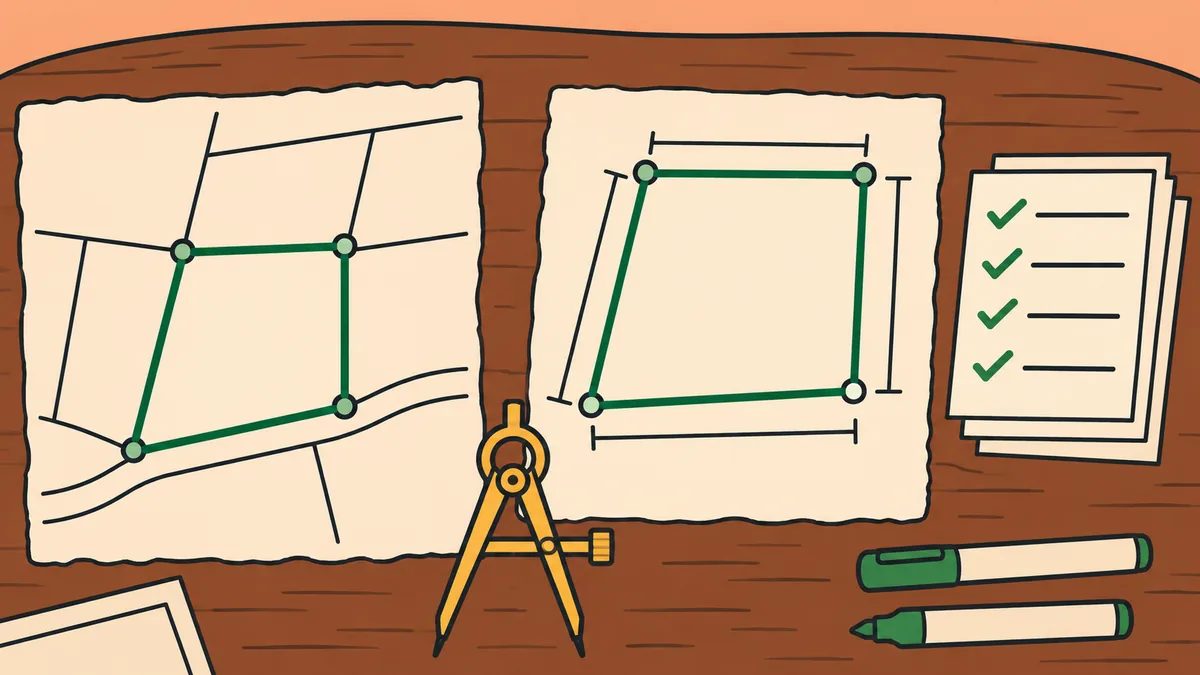
Translation systems regularly corrupt four kinds of factual detail: dates, personal names, monetary amounts, and physical boundaries. Keep a separate sheet for checking them:
- Dates: Check both the calendar date and the regnal year. In British history, dates prior to 1752 used the Julian calendar, and the civil year began on Lady Day (March 25), not January 1. Ensure the translated date reflects historical calculation without automated rounding.
- Names: Scribes spelled names phonetically. Cross-reference personal names across the document, particularly in signatures and endorsements on the reverse of the parchment.
- Currencies and Quantities: Historical currencies do not follow decimal notation. Verify whether amounts are stated in pounds, shillings, pence, or marks (13 shillings and 4 pence). In the 1704 case study, the consideration was five shillings.
- Boundaries: Trace the four compass directions (north, south, east, west) and list the abutting landowners and landmarks exactly as written.
Step 5: Write clear English without copying the source syntax
With the facts checked, write the translation in natural English. Watch for syntactic bleed: an editor can unconsciously copy the source's word order and foreign sentence structures even after correcting its vocabulary.
Our guide to manual editing of AI text starts by protecting facts before changing a sentence. The sister publication's guide on writing clear sentences by unmasking hidden actions can help with dense historical prose too. Use active verbs where they preserve the legal roles, and put conditions close to the actions they qualify.
Worked examples: raw machine output versus manual human revision
These four examples show errors in dense texts and the changes needed to correct them. The revisions keep the original facts while making the wording and legal meaning clearer.
Example 1: Archaic verbal forms and legal doublets
Here is a draft clause that runs too long:
Before: > The aforesaid grantor doth covenant, promise and grant to and with the said grantee that he the said grantor now is lawfully seized of a good, sure, perfect, absolute and indefeasible estate of inheritance in fee simple, without any manner of condition, mortgage, limitation of use or other matter whatsoever to alter, change, charge or determine the same.
The automated version preserves the archaic auxiliary doth, keeps five redundant adjectives describing the title, and retains a clumsy prepositional chain at the conclusion.
After: > The grantor covenants with the grantee that the grantor holds an absolute and unconditional estate of inheritance in fee simple, free of any condition, mortgage, limitation of use, or other matter to alter, change, charge, or determine it.
The revision removes the obsolete auxiliary verb and consolidates the doublet chain (good, sure, perfect, absolute and indefeasible) into direct terms, preserving the stated fee-simple estate without unneeded repetition. The text drops the repetitive adjectives while keeping every substantive condition from the draft.
Example 2: Runaway parcel enumeration without punctuation
Here is a raw automated draft attempting to translate an unpunctuated inventory of property parcels:
Before: > All that messuage tenement or dwelling house with the appurtenances and also all that close of arable land containing by estimation seven acres more or less together with all houses edifices barns stables yards gardens orchards meadows feedings pastures commons ways waters fishings privileges profits and advantages whatsoever to the same belonging or appertaining.
The automated draft outputs an unbroken catalog that strings together buildings, land, and appurtenant rights without punctuation.
After: > The property includes: > - That messuage, tenement, or dwelling house with its appurtenances. > - That close of arable land containing by estimation seven acres, more or less. > - All houses, edifices, barns, stables, and yards. > - All gardens, orchards, meadows, feedings, pastures, and commons. > - All ways, waters, and fishings. > - All privileges, profits, and advantages belonging or appertaining to the same.
The revision converts the runaway sentence into a structured, itemized list. It retains every parcel, building, and legal right from the source catalog, including edifices, yards, meadows, feedings, privileges, profits, and advantages, while punctuation and grouping make the inventory readable.
Example 3: Consideration and payment recitals
Here is an automated translation of a financial consideration clause. The clause is long and unwieldy, but it retains the payment terms of the historical transaction:
Before: > For and in consideration of the sum of five shillings of lawful English money to him in hand well and truly paid by the said John Ridley at or before the ensealing and delivery of these presents the receipt whereof he doth hereby acknowledge and thereof doth acquit and discharge the said John Ridley forever by these presents.
The automated draft reproduces historical defensive drafting in a long clause that preserves the payment terms, but its repetitive phrasing makes the transaction hard to follow.
After: > In consideration of five shillings of lawful English money paid in hand by John Ridley at or before the sealing and delivery of this deed, he acknowledges receipt and forever discharges Ridley from further claim for the payment.
The revision retains the exact historical sum of five shillings and the timing at or before sealing and delivery. It keeps the pronoun used in the source rather than inserting a name not present in the clause, while clarifying that receipt is acknowledged and Ridley discharged from further claim.
Example 4: Mixed Anglo-Norman loanwords and approximate measurements
Here is an automated translation dealing with non-standard spelling and French measurement loanwords:
Before: > All that parcel of meadow ground lying in the East Field containing by estimacion seaven acres and aux halfe be the same more or less abutting on the Queenes highway toward the South and upon the lands of Robert Trontbeif toward the West.
The automated model failed to translate the loanword estimacion, treated seaven as an unknown proper noun, and left aux halfe untranslated.
After: > The parcel of meadow in the East Field measures approximately seven and a half acres. It borders the Queen's highway to the south and Robert Trontbeif's land to the west.
The revision correctly interprets estimacion as an approximation, resolves the spelling to seven and a half acres, and separates the boundary description into a second clear sentence.
Machine translation output versus human post-editing
Use this comparison when deciding whether a draft needs ordinary post-editing or reconstruction from the source:
| Textual Element | Raw Machine Translation Behavior | Human Post-Editing Standard |
|---|---|---|
Archaic Inflections (-th) | Flags as spelling errors; misidentifies verb subjects | Modernizes verb forms while preserving grammatical agreement |
| Unpunctuated Clauses | Misaligns modifiers; splits sentences randomly | Maps clause hierarchy; inserts logical sentence breaks |
| Formulaic Boilerplate | Autocompletes missing text from training data priors | Replaces hallucinations with exact transcription of parchment |
| Legal Terms of Art | Substitutes modern colloquial synonyms (e.g. lease) | Preserves precise legal estates (e.g. fee simple, feoffment) |
| Named Entities | Misreads handwriting; substitutes common surnames | Cross-references signatures, seals, and historical gazetteers |
| Measurements and Money | Garbles non-decimal currency and archaic units | Audits exact values (e.g. shillings, marks, scores) against source |
| Structural Flow | Retains syntactic bleed and prepositional chains | Restructures sentences for direct modern readability |
Six common human editing mistakes when revising machine translations
Human review can introduce mistakes too. These six editing habits can leave errors in place or change the meaning of an otherwise accurate translation.
1. Accepting plausible legal boilerplate without source verification
A smooth paragraph can escape scrutiny. If a model says that a grantor warrants title against all claims, check whether the parchment actually says that. The warranty may be absent, or it may cover only claims arising through the grantor's own heirs. Accepting the broader wording would approve an untrue statement. Check boilerplate as closely as unfamiliar language.

2. Preserving foreign clause order and prepositional chains
Correcting vocabulary alone can leave the original's awkward clause order in place. Legal and administrative translations often retain chains such as in consideration of the transfer of the rights to the property of the grantor by the grantee. Our guide to paraphrasing without changing the substance explains the same editing constraint. Make the subject, verb, and object easier to follow while checking each relationship against the source.
3. Splitting compound sentences at the wrong grammatical boundary
A three-hundred-word sentence needs breaks, but their placement matters. A period can separate a condition from the obligation it governs. Suppose a buyer assumes maintenance costs provided that the roof is repaired prior to Michaelmas. If you move the condition into another sentence without showing the connection, the buyer's obligation can appear unconditional.
4. Omitting a dedicated terminology glossary
Use the same term throughout a technical or historical collection. Without a fixed glossary, an editor may call a messuage a homestead on page one, a farmhouse on page four, and a tenement on page seven. Our guide to humanizing AI text manually recommends deciding which terms must stay before revising the prose. Keep the project glossary open as you work.
5. Guessing at flourished or degraded characters
A smudged or heavily flourished word invites a guess from context. That repeats the model's mistake. If your scribal alphabet key does not resolve the word, mark it as doubtful or use brackets ([illegible]). Researchers and legal professionals need to know where the evidence stops; an invented word hides that gap.
6. Over-smoothing the text until essential nuances disappear
Repetition in a deed can serve a legal purpose. Editors trying to make the prose conversational sometimes remove qualifiers and exceptions along with empty boilerplate. Keep wording that prevents an unintended interpretation, even if it feels repetitive. Our review of telltale signs of AI writing can help you spot stylistic habits to change, but clarity still depends on preserving those conditions.
Frequently asked questions
Can prompting LLMs with domain glossaries prevent translation hallucinations on dense texts?
Domain glossaries and structural rules in the system prompt significantly reduce terminology drift. They do not eliminate hallucinations when text is damaged or lacks punctuation. If the model cannot resolve a character string or clause boundary, its decoder still predicts likely tokens from context. A glossary helps keep vocabulary consistent; rigorous human verification is still needed to establish factual accuracy.
What is the difference between post-editing a machine translation and translating from scratch?
Ordinary post-editing means comparing a machine draft with its source, correcting errors, and polishing the wording. Light post-editing often fails with dense historical and complex legal documents because plausible hallucinations can fool the reviewer. For those texts, transcribe the structure and extract the names and other factual details first. Use automated tools afterward to help draft individual sentences.
When should an organization reject machine translation entirely for historical or legal documents?
Reject raw machine translation whenever property rights, contractual liability, or historical evidence depends on the wording. For contested title boundaries, inheritance disputes, or formal archival publication, require independent palaeographical transcription and professional legal review before relying on an automated translation.