Grammarly vs an AI humanizer: which do you need?
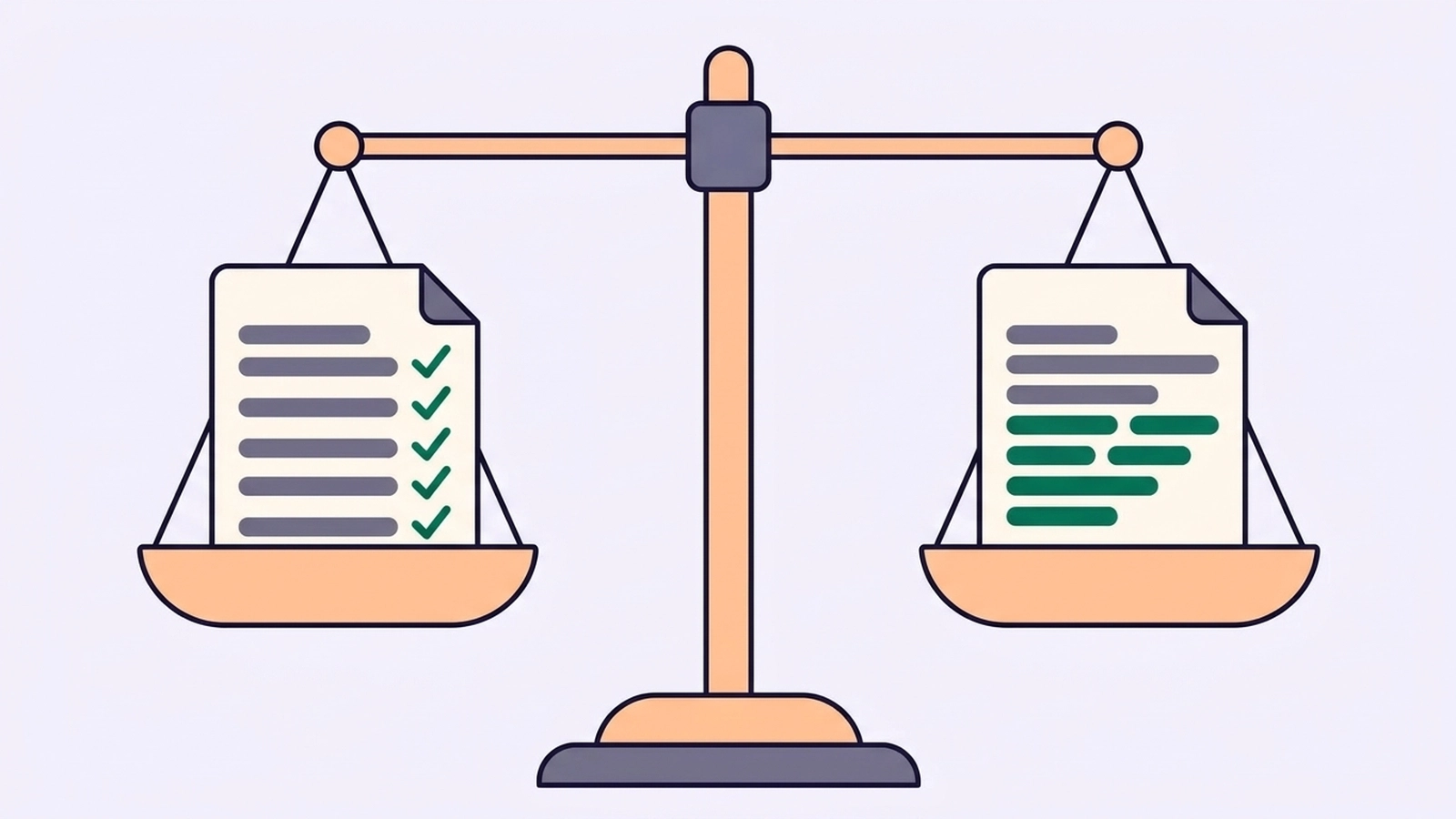
Start with selective grammar suggestions when your draft says what you mean and mainly needs corrections or tighter wording. Consider a passage rewrite when the sentences are correct but the tone or flow needs work. Grammarly offers both kinds of help, including an AI humanizer. A separate humanizer is another product to compare, not an automatic upgrade for difficult drafts.
The choice depends on the passage and the changes you want. A registration reminder might need a shorter opening. A project update might need fewer repetitive transitions. Neither problem tells you, by itself, which brand will produce the most useful revision. Compare the available controls and the actual wording, and keep an edit only when it improves the draft.
Compare the editing options, not just the labels
Grammarly's grammar checker covers grammar, spelling, punctuation, and conciseness, with additional clarity, tone, and fluency suggestions. Its page also describes full-sentence rewrites. Calling it a tool that only fixes isolated words would understate its scope.
Grammarly's AI humanizer is intended to revise AI-generated text for a more natural style. Its Humanizer agent offers four preset styles and a custom voice created from a pasted writing sample. The page lists support for English, Spanish, French, German, Portuguese, and Italian.
Separate humanizers need individual comparisons. The category name does not establish how much text a product changes, whether it accepts voice samples, or how formal its output will be. Check the specific product's documented features before assuming that it can or cannot meet your needs.
| Option | What to consider it for | What to compare |
|---|---|---|
| Grammarly grammar suggestions and rewrites | Corrections, conciseness, and clearer sentences | Whether a small correction resolves the problem or a rewrite helps |
| Grammarly AI humanizer | Revising the tone and phrasing of AI text | Whether the chosen style suits the passage and its reader |
| A separate AI humanizer | An alternative rewriting workflow | That product's documented controls and the usefulness of its output |
How much of the draft needs changing?
Separate the scope of your editing task from the scope of the software. You might use a tool with broad rewriting features to fix one sentence. You might also need to reorganize a section by hand even when a tool offers passage rewrites. The presence of a feature does not settle whether you should use it.
For a paragraph with one awkward phrase, start there. For a paragraph whose sentences repeat the same structure, consider the passage as a whole. If the argument is out of order, decide which idea belongs first before requesting smoother language. A polished sentence cannot decide what you intended the section to say.
Which voice fits the reader?
A natural voice can be formal, restrained, or conversational. A policy does not need to sound like a chat message. An internal update may benefit from direct wording without slang or extra enthusiasm. Choose the register according to the document, rather than treating casual language as the goal of every rewrite.
A writing sample gives you a reference for that choice. Compare the revision with the vocabulary and sentence patterns you would normally use in this setting. A custom voice feature may be useful, but its presence is not proof that every suggestion will fit. Equally, do not assume that a separate humanizer lacks such controls without checking its documentation.
How much review will the edit need?
Review effort depends on what changed and how much precision the passage requires. A short change to a permission can deserve more attention than a longer change to an opening phrase. A full paragraph rewrite may be straightforward to assess if it contains little detail; a single technical sentence may take longer.
Avoid assigning a fixed low, moderate, or high review burden to each product category. Instead, look at how clearly the tool presents its changes and whether you can compare them with the original. The examples below show why the size of a change and its importance are different questions.
When selective grammar suggestions are enough
Use selective suggestions when the ideas follow a sensible order and the tone already suits the audience. You do not need to replace a whole paragraph just because a rewriting option is available. Accepting a useful correction and leaving the rest alone is a valid editing decision.
Consider this registration reminder:
Before: "In order to complete the registration process, participants should make sure that they submit the required intake documentation prior to the close of business on Friday."
After: "To complete registration, participants should submit the required intake documentation before the close of business on Friday."
The opening becomes shorter, and "before" replaces "prior to". The instruction is easier to find because fewer words separate the participants from the action they should take. This is a wording problem that can be handled with a few local edits; it does not call for a new structure.
The details give those edits their limits. "Should" remains "should", and the required intake documentation is still named. "Close of business on Friday" stays intact because the sentence supplies no clock time. A shorter reminder that substitutes a guessed deadline would be a worse edit, however smoothly it reads.
An engineering note presents a different choice:
Before: "After the database migration was completed, the performance report was generated by the engineering team to document system latencies."
After: "After the database migration was completed, the engineering team generated the performance report to document system latencies."
The second clause becomes active because the original names the team that generated the report. Moving that team before the verb makes the action more direct. The purpose of the report, documenting system latencies, remains in place.
The opening stays passive. It does not say who completed the migration, so assigning that work to the engineering team would add information. This is a useful reason to reject a blanket instruction to make every sentence active: the grammar should reflect what the draft actually establishes.
These passages also show why "grammar checker" and "humanizer" are imperfect dividing lines. The registration edit changes phrasing, and the engineering edit changes clause structure. Both are modest revisions. Choose the suggestion that solves the problem rather than insisting that a particular label owns that kind of edit.
When Grammarly's humanizer is worth considering
Consider the humanizer when you want another version of a passage whose wording feels stiff. Correct grammar alone does not make a sequence of sentences pleasant to read. Repeated openings and abstract phrases can get between the reader and an otherwise clear point.
For an internal project update, the task might be to remove unnecessary transitions while keeping the relationships between the ideas:
Before: "Furthermore, regular communication among team members plays an essential role in ensuring that project milestones are successfully achieved. Additionally, weekly project updates provide necessary visibility into ongoing tasks. Consequently, project leads can maintain accountability across all departments."
After: "Regular communication among team members is essential to achieving project milestones. Weekly project updates provide necessary visibility into ongoing tasks, so project leads can maintain accountability across all departments."
The revision drops "Furthermore" and "Additionally" because these sentences do not need those announcements. It replaces "plays an essential role in ensuring" with "is essential to". The result gives more space to the update itself and less to phrases that introduce it.
The last connection still matters. "Consequently" becomes "so", retaining the link between visibility and what project leads can do. The modal verb "can" also stays. Changing that clause to a claim that project leads maintain accountability would turn a statement of capability into an assertion that it happens.
This passage needs attention across sentences, but it does not require a completely new outline. A useful rewrite can keep the order of the ideas. More visible change is not necessarily more improvement, and a version with extra warmth or enthusiasm would not automatically suit an internal update.
When to compare a separate humanizer
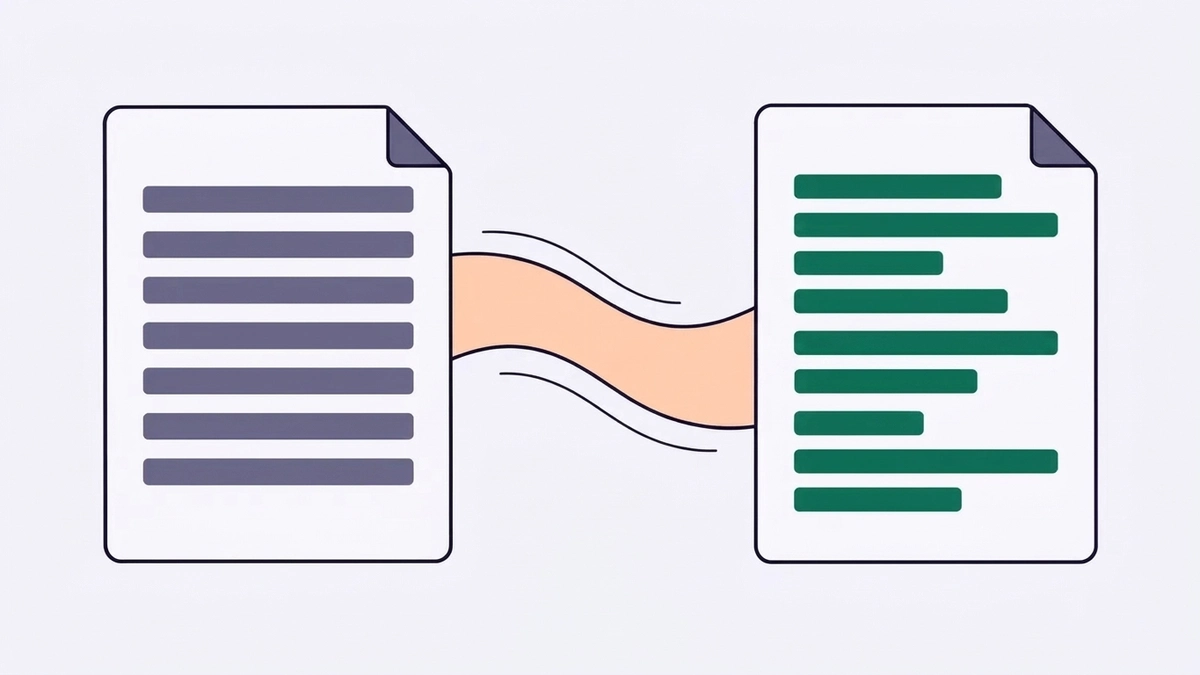
Compare a separate product when you want an alternative to the editing workflow or results you already have. Do not reserve standalone humanizers for full documents or assume they must rewrite everything. Decide how much text you want to revise, then check whether the product supports that task.
Our guide to what is an AI humanizer explains the editing goal, while the AI humanizer comparison discusses individual options. When assessing one, distinguish documented features from your judgment of a particular revision. A tone control is a feature; whether its output suits your report is an editorial decision.
The following passage needs more direct verbs:
Before: "It is widely recognized that the collection of customer feedback serves as a primary mechanism for the continuous improvement of product features. The support team engages in the systematic categorization of user tickets so that software engineers can gain an understanding of recurring pain points."
After: "It is widely recognized that collecting customer feedback is a primary mechanism for continually improving product features. The support team systematically categorizes user tickets so software engineers can understand recurring pain points."
"Engages in the systematic categorization of" becomes "systematically categorizes". The support team and its work become easier to see. "Can gain an understanding of" becomes "can understand", retaining the modal verb while shortening the phrase. The edit also preserves the continuing nature of the improvements.
The opening claim, "It is widely recognized", remains a separate problem. The passage does not identify who recognizes it or what supports that consensus. Rephrasing the sentence cannot supply that evidence. Before publication, the writer needs to resolve the claim rather than mistake a cleaner sentence for a supported one.
Use this distinction when comparing tools. You can prefer one version's verbs without endorsing every claim it retains. You can also keep part of a suggested rewrite and reject the rest. There is no need to accept a product's entire output as a single editorial decision.
What a policy rewrite must preserve
Policy language makes the cost of small omissions easy to see. A sentence may look wordy because it contains several conditions, yet those conditions may be the point of the sentence. Shorten the phrasing around them rather than treating each qualification as clutter.
Before: "Employees may work remotely on Mondays and Fridays, provided that their departmental supervisor grants written authorization at least forty-eight hours in advance."
After: "Employees may work remotely on Mondays and Fridays if their departmental supervisor gives written approval at least forty-eight hours in advance."
"If" replaces "provided that", and "gives written approval" replaces "grants written authorization". The permission, specified days, approver, written format, and advance notice all remain. There is less formality in the phrasing without less detail in the rule.
Several tempting cuts would go too far. Replacing "Mondays and Fridays" with "two days a week" would lose the named days. Replacing "departmental supervisor" with "manager" would no longer identify the same role. Dropping "written" would remove a condition, not merely simplify the prose.
"At least" also needs to stay beside the interval. It establishes a minimum, so approval given five days in advance can satisfy the timing condition. "Forty-eight hours in advance" alone does not express that minimum as clearly. The shorter wording would leave the reader with a different instruction.
The AI humanizer vs paraphraser comparison considers related choices about rewording. Whatever the tool is called, this policy needs an editor who can distinguish a formal phrase from a necessary condition.

A step-by-step walkthrough
This access directive needs lighter phrasing and a better transition between two rules:
Before: "Department heads may authorize external consultants to access production databases for scheduled maintenance, provided that the security officer receives a signed non-disclosure agreement at least seventy-two hours prior to system access. Furthermore, external consultants must complete credential verification before data transfers can begin."
After: "Department heads may authorize external consultants to access production databases for scheduled maintenance if the security officer receives a signed non-disclosure agreement at least seventy-two hours before system access begins. External consultants must also complete credential verification before data transfers can begin."
Step 1: Choose the phrases to change
Mark "provided that", "prior to", and "Furthermore". These are the places where simpler wording would help. The first sentence already puts the authorizing role before the permitted action, so leave that order alone. There is no need to reorganize the entire directive to address three formal expressions.
Step 2: Make the local edits
Replace "provided that" with "if" and "prior to system access" with "before system access begins". Accept these changes if a tool offers them, or make them by hand. Evaluate the wording without assuming that either product will return these exact suggestions.
Leave "receives" in place. Changing it to "signs" would give the security officer a different task. The original specifies who receives the agreement, but it does not identify its signer. This is a reason to inspect the verb as closely as the document name.
Step 3: Connect the sentences without merging the rules
Replace "Furthermore" with "also" after "must". The second sentence then starts with the consultants who must act, while still marking credential verification as an additional requirement.
Keep the sentence break. The agreement's timing relates to system access; verification relates to data transfers. Combining both into a single approval clause would make those relationships harder to follow. A shorter passage is not useful if the reader must untangle which condition applies to which action.
The guide to humanizing AI text manually covers further phrasing choices. Here, the transition is the only change needed across the sentence boundary.
Step 4: Compare in both directions
Read from the original to the revision to check for omissions, then from the revision back to the original to check for additions. Keep "may authorize", "must complete", and "can begin" attached to their original subjects. Check that each condition still governs the same event.
Reject an inserted submission portal or a conversion of hours into business days: neither appears in the draft. This check answers a different question from proofreading. A sentence can be grammatically sound while describing a procedure the original never specified.
Step 5: Read the passage in context
Return the revision to its surrounding paragraphs and check the role names against nearby references. If another section uses "department directors", establish whether it means the same role before changing either title for consistency.
Read the two sentences together once more. The revised transition should connect them without making the second requirement sound optional. Stop when the wording works in context; requesting another variation needs an editorial reason.
Common mistakes when choosing a tool
Using detector results as the editing goal
A detector result does not answer the question this comparison addresses: which edit helps the reader? Keep your judgment focused on the text's clarity and usefulness. The discussion of whether AI humanizers beat AI detectors addresses that separate concern; it should not replace an editorial reason for changing a sentence.
Accepting every suggestion for consistency
Consistency does not require every sentence to receive the same treatment. In the engineering note, one passive clause stays and another becomes active for a clear reason. Apply the same judgment across a document. Accepting all suggestions can undo deliberate choices just as rejecting them all can leave useful improvements unused.
Frequently asked questions
Should I choose a smoother output if it dropped a deadline?
No. An output missing a deadline fails the factual check, even if restoring it looks easy. Keep it out of consideration until you have repaired it and checked the entire revision again. An obvious omission is not proof that it is the only omission.
Compare ease of repair only after the candidates preserve the source's meaning. The accurate but awkward version gives you a sound starting point; smoothness does not excuse a missing instruction. If neither candidate passes, return to the original rather than choosing a winner by default.
What should I do when a useful rewrite alters the order of my ideas?
Read the sentence before the rewritten passage and the sentence after it. Then check what the reader knows at each point. A pronoun needs a clear referent, and an explanation should arrive where it helps the reader understand the next claim.
Moving a prerequisite to the opening can make an instruction easier to follow. Moving background ahead of the point can delay the answer the reader needs. Judge the sequence by that reading task. If the phrasing improves but the order does not, keep the wording and restore the original sequence.
How should I handle a draft with mixed editing needs across different sections?
Give each section an editing task before submitting text. An executive summary with repetitive phrasing needs different attention from an appendix whose technical wording is already precise. Select passages at meaningful boundaries, keeping dependent explanations with the claims they explain.
After editing the sections, read their joins. Check whether a revised introduction still prepares the reader for the detail that follows and whether the conclusion still follows from the argument. Reviewing separate passages does not replace reading the assembled document.